Keeping water under control is rarely about “a pump” in isolation. It’s about how fast you can mobilize, how long you can run, what your discharge permit allows, and what happens at 2 a.m. when the sump level spikes. The decision point most crews face is diesel vs electric dewatering pumps, because the power source quietly dictates the whole system: suction lift limits, controls, fuel or cable logistics, noise, emissions, and your real operating cost per gallon moved.
Core Differences: Portable Diesel vs Electric Submersible
You’re usually comparing two different architectures, not just two fuels.
A portable diesel pump on a trailer or skid is typically a dry-installed, self-priming centrifugal pump with an engine, a fuel tank, and a priming system (vacuum pump or compressor assist). You set it above grade, run a suction hose down to the sump, and push water to discharge through layflat or HDPE.
An electric dewatering pump in most civil and mining contexts is a submersible: the pump and motor sit in the water. Because the pump is already flooded, suction lift is not the governing constraint. Instead, your constraints shift to power distribution: panel selection, cable voltage drop, protection devices, and sometimes a variable frequency drive (VFD) for control.
The differences that end up deciding the job are practical:
- Portability: Diesel packages move as one unit and start working quickly; submersibles are light, but your cables, panels, and sometimes a generator become the “real” package.
- Suction lift: Diesel dry pumps are limited by physics and NPSH margins; submersibles bypass suction lift by living below the waterline.
- Infrastructure: Diesel needs fuel and space; electric needs power availability, safe cabling routes, and correct generator sizing if you are off-grid.
When you put both options on the same bid tab, it’s easy to compare rental rate or purchase price and miss the system costs that decide performance.
With diesel, your water removal rate depends on how well the suction side behaves: suction hose length and diameter, air leaks, priming reliability, altitude, and whether you are flirting with cavitation as suction lift increases. With electric submersibles, your water removal rate depends on electrical health: stable voltage at the motor terminals, cable protection from traffic and rockfall, and control settings that keep the pump on its curve.
If you treat the pump as a full package, the question becomes: what failure mode is easier for your site to prevent? Air and suction issues, or power and cable issues?
Diesel Dewatering Pumps: Advantages and Limitations
A diesel pump earns its keep when you need autonomy and rapid deployment. You can land a skid, connect suction and discharge, fuel it, and start dewatering before temporary power is even planned.
That autonomy is real but finite. Your run time is tied to tank size and fuel consumption, so refueling logistics quickly become part of daily production planning. On remote civil spreads or pit perimeters, that’s often acceptable because you already have fuel handling in place.
Diesel systems also handle messy water well. A dry-installed centrifugal pump can be selected for large solids passage and can tolerate “snore” conditions (air ingestion) better than most submersibles, assuming the priming system is designed for it.
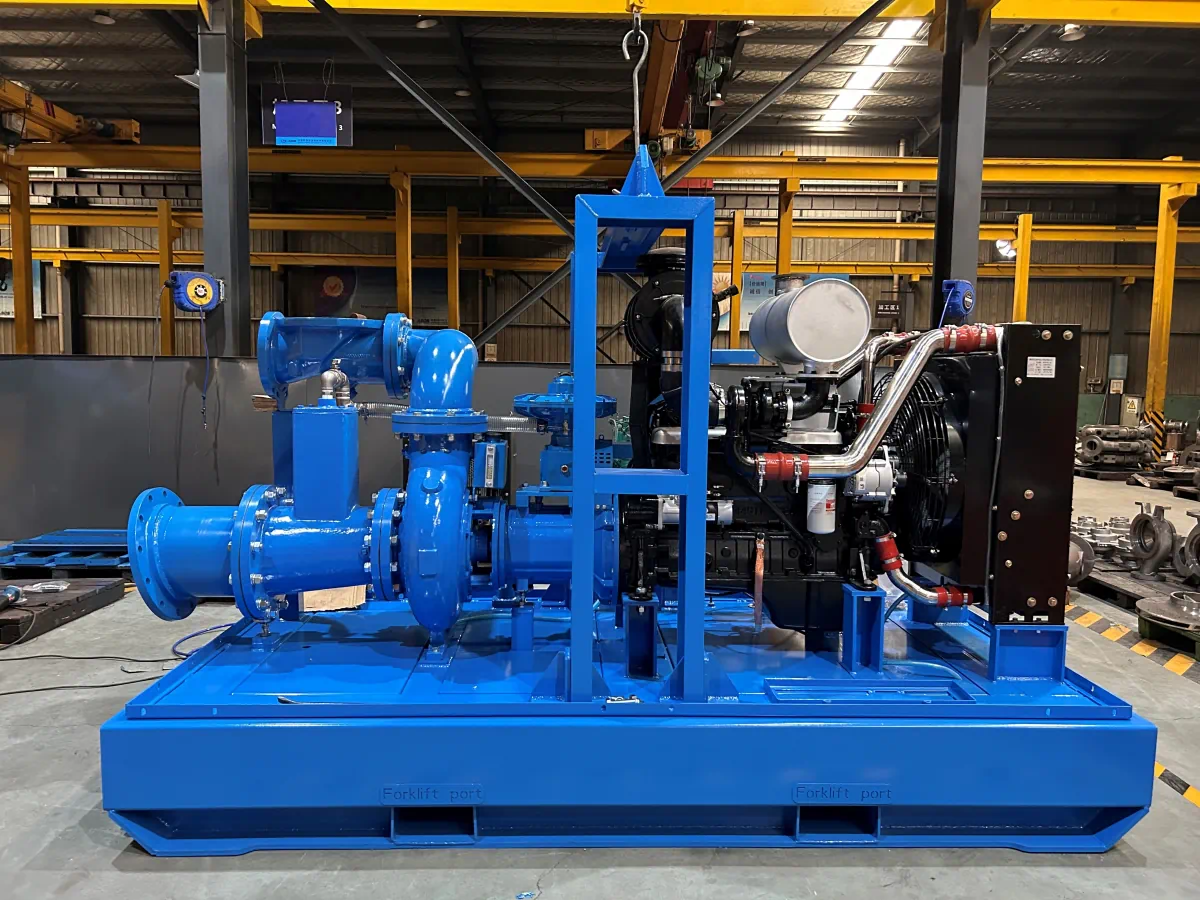
Here’s what tends to work in your favor on diesel:
After you’ve confirmed your duty point, the diesel decision is often made by site reality:
- Mobility: trailer or skid packages relocate fast between sumps and work areas.
- Priming system: vacuum-assisted priming shortens start time and can re-prime after air enters the suction line.
- Remote operation: you can run without grid power, which is often the decisive constraint early in a project.
Limitations show up just as clearly. Suction lift is the big one. Even if the theoretical atmospheric limit is higher, real-world limits are lower once you account for vapor pressure, friction losses, and NPSH required. As suction lift rises, small air leaks and minor suction losses become production losses.
Regulation also matters. If you are buying newer units, Tier 4 emissions compliance can raise capital cost and may impose operating practices (DPF regeneration behavior, ULSD fuel requirements). Where permits or owner standards are tight, “meets Tier 4 Final” stops being marketing and becomes a gate you must pass.
Electric Dewatering Pumps: Advantages and Limitations
Electric submersibles are attractive when your site can support them, because the operating profile is simple: lower it, connect power, and run. Many crews describe them as “plug and play,” and that’s close to true if your panel, protection, and cables are already standardized.
The technical advantage is structural: because the pump is submerged, you avoid suction-side fragility. No suction lift troubleshooting. No chasing a pinhole air leak on a camlock. No priming delays. Your pump either has water around it or it doesn’t.
You also gain jobsite flexibility in sensitive environments. Electric units are quiet, and the sound profile is usually dominated by water flow, not an engine. In urban work, that can reduce the need for aggressive noise attenuation and help you run longer shifts without complaints.
Electric advantages that often matter in practice:
- Lower maintenance load: no engine oil changes, filters, belts, or aftertreatment checks.
- Unattended operation: with floats, level transducers, and motor protection, you can run unattended safely, especially where staffing is constrained.
- Control range: with a VFD, you can soft-start, avoid hydraulic transients, and trim flow to match inflow instead of throttling wastefully.
The limitations are mostly infrastructure and discipline. Electric dewatering works best when you treat power distribution as part of the pumping system, not an afterthought. Cable voltage drop can quietly reduce torque and increase motor heating. Poor terminations invite nuisance trips or failures. Generator sizing mistakes show up immediately during starts.
Dry running is another constraint. Submersibles depend on water for cooling and seal health. Some designs tolerate brief low-water events with thermal protection, but you should still treat dry running as a condition to avoid, not a feature to rely on.
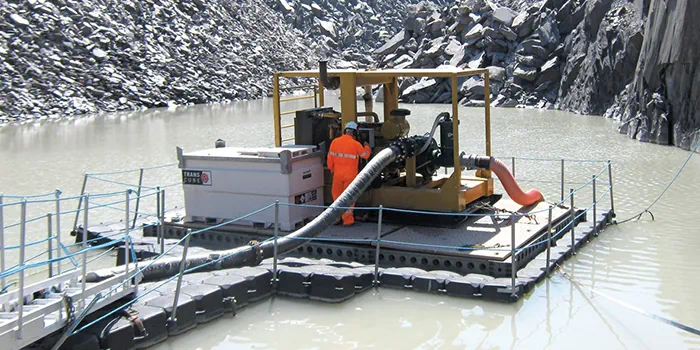
Cost Comparison: Upfront CapEx vs Operational Fuel/Energy
Your cost picture changes depending on whether you’re building a temporary system for weeks or an installed system for months.
Diesel often feels cheaper at the start because installation is minimal. Electric often wins over time because energy and maintenance are lower, assuming you have stable power at the point of use. If you must bring power to the water, that setup can dominate early cost.
A practical way to compare is to separate costs into four buckets: pump package, setup, energy, and service. The table below is a planning tool, not a quote, but it matches how costs usually behave in the field.
| Cost Element | Diesel Portable Pump (dry-installed) | Electric Submersible Pump |
|---|---|---|
| Pump package CapEx | Higher when Tier 4 Final engines and enclosures are included | Often lower for pump and motor, higher if specialized controls are required |
| Setup and infrastructure | Low: hoses and fuel readiness | Medium to high: panel, protection, cable routing, possible VFD |
| Energy cost | Higher OPEX: fuel consumption plus idling losses | Lower OPEX when grid power is available and tariff is stable |
| Maintenance and wear | Higher: engine oil, filters, belts, aftertreatment attention | Lower: seals, bearings, cable inspections, wet-end wear parts |
| Logistics | Refueling logistics, spill controls, fuel storage | Cable management, electrical safety, generator sizing if off-grid |
| Best economic fit | Short campaigns, high mobility, no power nearby | Longer runtimes, fixed or semi-fixed sites, noise or emissions constraints |
If you want a quick screening metric, calculate cost per operating hour, then translate to cost per volume based on expected flow. Diesel can look competitive until you add fuel deliveries, operator time, and service intervals. Electric can look expensive until you spread panel and cable costs across months of operation.
Job Site Constraints: Noise, Emissions, and Power Availability
The “best” pump can still be the wrong pump if the site blocks it.
Noise is usually the clearest constraint. Diesel pumps can be managed with enclosures and placement, but it takes planning. Electric submersibles are naturally quiet and are easier to permit near residents, hospitals, or night work.
Emissions constraints are getting tighter on many projects. Tier 4 emissions compliance helps, yet it does not make diesel “zero impact.” If your job is indoors, underground, or in a ventilation-limited area, exhaust is often the deciding factor.
Power availability is the gate for electric. If you have grid power near the dewatering point, electric is straightforward. If you don’t, you either run distribution from a distant source or bring a generator. The moment you add a generator, you are back to fuel logistics and engine maintenance, and your efficiency advantage can shrink.
Many site teams miss one electric-specific constraint: long cable runs. Cable voltage drop and physical exposure to traffic, blasting, or sharp rock can become your main reliability risk if routing and protection are not treated like critical path work.
Maintenance Requirements and Reliability
Maintenance is not just cost. It’s uptime risk.
Diesel systems have more moving parts and more consumables. Even with good service intervals, you are managing filters, oil, coolant, belts, battery health, and the priming system components that make self-priming possible. Tier 4 Final engines can also introduce operational sensitivity if the unit runs lightly loaded for long periods.
Electric submersibles simplify the routine, but they concentrate risk in fewer components: the power cable, the seals, and the motor protection setup. A crushed cable from haul traffic can stop you just as fast as a clogged fuel filter. The difference is that electrical failures often look binary, while diesel failures sometimes degrade gradually.
If reliability matters more than any single cost line item, you often end up with a hybrid plan: electric as primary (quiet, lower OPEX) with a diesel standby for power outages or extreme inflow events.
Selection Checklist: Choosing the Right Power Source
You can make the decision quickly if you treat it as a set of go or no-go rules that reflect physics and site constraints.
Use this checklist as a screening tool before you start comparing brands and impellers.
| Go or No-Go Rule | If True, Favor This Choice | Why it matters |
|---|---|---|
| Suction lift > 28 ft (8.5 m) at any operating water level | Electric submersible (or redesign with booster / move pump) | Diesel dry pumps are constrained by suction lift and NPSH margin |
| No reliable power within practical distance and no safe cable route | Diesel | Electric still needs infrastructure, even if the pump itself is light |
| Work is in residential or urban corridors with strict noise limits | Electric | Quiet operation reduces noise attenuation requirements |
| You expect frequent relocations between multiple sumps | Diesel | One self-contained unit can relocate faster than panels and cables |
| Water contains large debris and trash solids | Diesel | Dry-installed trash pumps usually tolerate larger solids passage |
| You must run unattended for long periods with minimal site presence | Electric (with proper controls) | No refueling, fewer routine checks, safer automation options |
| The only available power is a diesel generator | Case-by-case | You may lose efficiency advantage and still carry fuel and maintenance burdens |
| Strict emission requirements or enclosed spaces | Electric | No onsite exhaust; diesel may be prohibited regardless of Tier 4 |
FAQ
1. Which pump is better for high suction lifts: diesel or electric?
Electric is better because a submersible avoids suction lift entirely by operating below the waterline. Diesel dry-installed pumps are limited by suction lift and NPSH constraints.
2. Are electric dewatering pumps cheaper to run than diesel pumps?
Often yes when grid power is available, since electricity cost per kWh and electric motor efficiency usually beat diesel fuel consumption and engine maintenance. If you must run a generator, the gap can narrow.
3. Can I use a diesel pump in a tunnel or enclosed space?
Usually not without engineered ventilation and approvals. Exhaust gases and heat load make diesel a poor fit in enclosed spaces, even with modern Tier 4 emissions equipment.
4. How do I size a generator for an electric dewatering pump?
Start with motor kW or HP, then account for starting current and power factor. In practice, generator sizing is commonly 1.25 to 2.0 times motor kW depending on starting method, cable length, and whether a VFD or soft starter is used.
5. Do electric submersible pumps require priming?
No. A submersible is already flooded, so it does not need a priming system. Your requirement is to keep it submerged and protected from dry running.
6. What are the maintenance benefits of electric pumps over diesel?
You avoid engine oil and filter changes, belts, fuel system service, and aftertreatment tasks. Your main upkeep becomes cable checks, seal health, and wet-end wear parts.
7. How does Tier 4 Final regulation affect diesel pump selection?
It can raise purchase price and can influence operating practices and service needs because Tier 4 Final engines use emissions aftertreatment. You also need compliant fuel and trained service support.
8. Can diesel pumps run dry indefinitely?
Not indefinitely. Many diesel dewatering pumps tolerate intermittent air ingestion and can re-prime, but extended dry running risks overheating seals, damaging the pump end, and stressing the priming system.
9. Which pump type is better for residential or urban dewatering?
Electric is usually better because it is quieter and has no onsite exhaust, which helps with permits, public complaints, and overnight operation.
10. What is the main disadvantage of electric dewatering pumps?
They depend on electrical infrastructure. Without reliable power, correct protection, and safe cable routing that controls cable voltage drop and physical damage, electric pumps can become difficult to deploy and keep online.